
Midlife has a bad reputation.
We typically think of it as that dreadful and turbulent point in life at which options narrow, capabilities fade, and the best years recede in the rearview mirror. It’s a compelling story, and it’s largely wrong.
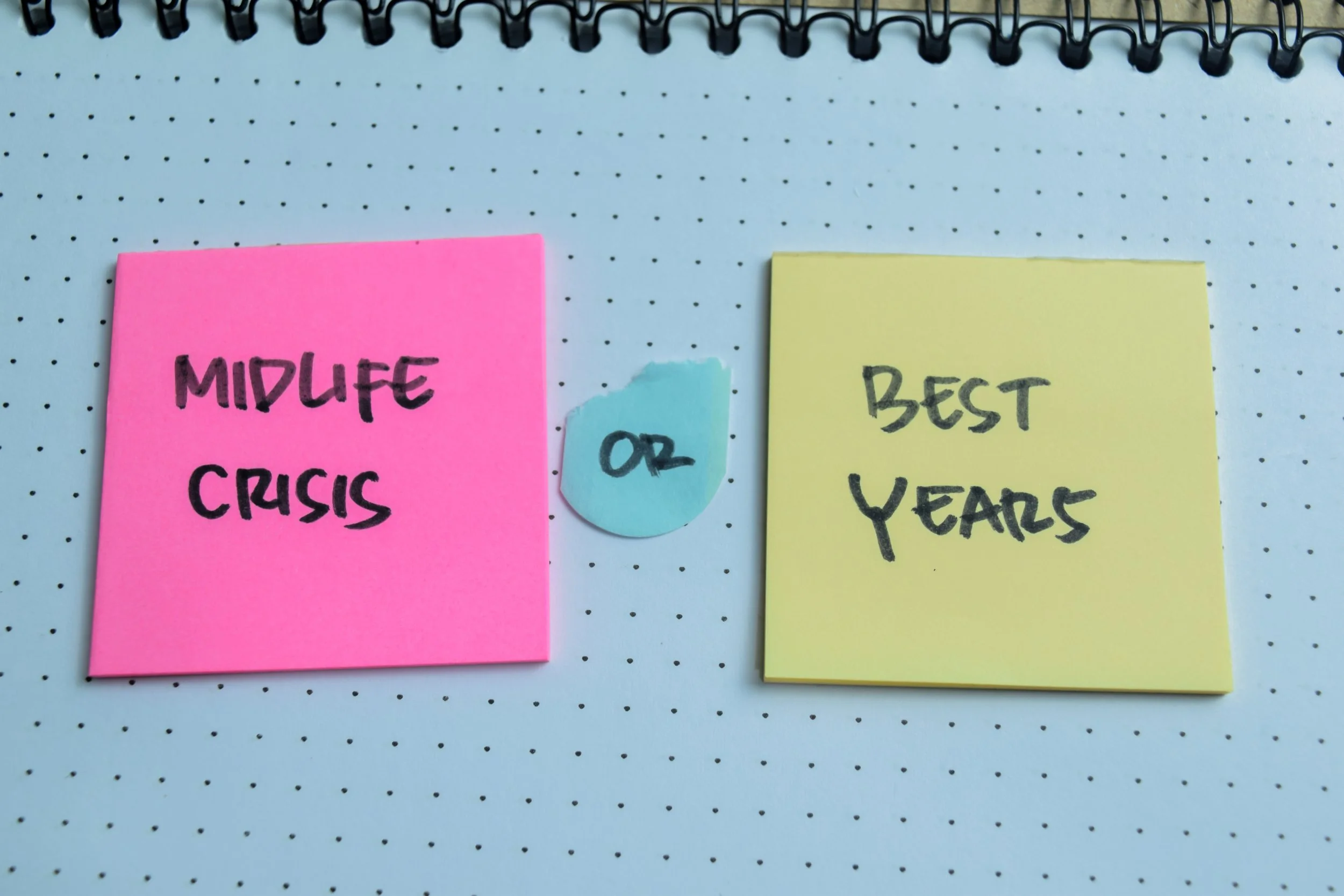
While midlife may be a difficult season, research across the lifespan finds that subjective wellbeing typically stabilizes or even rises from midlife to older adulthood. Midlife marks an important transition from an era defined by external milestones and advancement to one defined by openness, presence, and alignment of how we live with what we truly value.
As with many transitions, getting from one stable season of life to another entails discomfort and turmoil. We begin to grapple with difficult questions: What is most important to me now? What should I start doing or stop doing to be happier? How can I maintain my capacity to pursue the things I care about? During this time, we can think of midlife as a training season for building the physical capacity, emotional flexibility, and meaning we hope to carry into our older years.
The Body as Foundation
In youth, physical health goals often center on peak performance or aesthetics. In midlife, they usually shift toward subtler pursuits: having the energy to show up fully for the people we love, the resilience to handle life’s challenges and setbacks, and the functional capacity to keep doing the things that bring us joy.
Physical activity is among the best-evidenced interventions for improving wellbeing in aging populations, and higher wellbeing is in turn associated with healthier, longer lives. Many people who pursue physical fitness discover that it inspires other important changes in their lives that transcend physical health: developing new skills, taking on challenging endeavors, forming new relationships, and finding unexpected sources of meaning.
In practical terms, maintaining physical health in midlife and beyond means committing to four core habits. Each of these practices reinforces the others and creates a stable foundation for you to pursue your values.
Regular purposeful exercise (including resistance training)
Healthy diet
Good sleep hygiene
Effective stress regulation
Living with Authenticity
Positive psychology draws a distinction between two kinds of happiness: hedonia — feeling good — and eudaimonia — living with purpose and authenticity. While both forms of happiness matter to subjective wellbeing, eudaimonia takes on increasing importance as we age, and depends greatly on achieving what psychologists refer to as internal coherence.
Internal coherence describes a state in which your choices, roles, habits, and goals work together to reflect your true values, rather than pull you in competing directions or cause inner conflict. It is a hallmark of psychological maturity, and it tends to become both more possible and more significant as we move through midlife.
Over a lifetime, we accumulate experiences that don’t always fit neatly together: careers that changed direction, relationships that ended, ambitions we pursued and abandoned, and roles we grew into or outgrew. We also experience losses, failures, disappointments, and grief. Achieving internal coherence requires you to reflect honestly on these experiences and reconcile them with current responsibilities and future limits without self-contempt. If you succeed, you arrive at a more consistent and comprehensible story about your life, one that makes present decisions clearer and regret less paralyzing.
Psychologist Dan McAdams, who has spent decades studying how people construct personal narratives, finds that individuals who tell redemptive life stories — ones that acknowledge suffering but emphasize growth — show higher levels of eudaimonic wellbeing and resilience. Learning how to frame your own story this way is at the heart of a technique called benefit finding.
Benefit Finding
Benefit finding is the practice of recognizing how difficult or painful experiences have transformed you in meaningful, constructive ways. Although similar to a gratitude practice, benefit finding can involve greater discomfort as you reckon with what hardship has given you and begin to reappraise your past more positively.
A practical way to begin is to identify two or three genuinely difficult experiences from your past. For each one, ask yourself: What did this teach me? How did this strengthen me? How does this inform my current values or capabilities? These questions help you uncover the ways adversity has shaped your character and priorities.
Benefit finding can lead to growth in these areas:
Acceptance of life’s uncertainties and limitations
Deeper empathy and compassion toward others
Gratitude for relationships and small moments that previously went unnoticed
Strengthened family bonds
A more grounded sense of self-worth and inner strength
Clarification of values and a better sense of what no longer deserves your energy
Psychologist Barbara Fredrickson’s broaden-and-build theory of positive emotions suggests that the practice of benefit finding expands a person’s ability to reach out to new people, take on new challenges, update their worldview, tolerate uncertainty and ambiguity, and remain oriented toward other people and community. Difficult or uncomfortable past experiences, when processed well, can be crucial to your eudaimonic wellbeing.
Defining Purpose
People often think their purpose should take the form of a mission statement — something timeless and persistent over the arc of one’s life — but this may be an imperfect definition. Instead, a more helpful way to think about purpose is as an ongoing orientation you can keep updating as your life changes.
A meaningful life purpose doesn’t have to drive a career change or a retreat into the wilderness; it can just as powerfully reshape how you see your existing circumstances. A good life purpose energizes you, helps you filter decisions, and gives you a sense of where you’re heading. If it doesn’t accomplish these things, it could be obsolete or inauthentic.
Many researchers describe eudaimonic flourishing in terms of three pillars: living with purpose, acting from self-determined values, and continuing to grow as a person. Encouragingly, these deepen with age and accumulated experience. Midlife isn’t a deadline for achieving one’s purpose; in fact, it’s a prime time for defining purpose, when you finally have lived enough life to know what it’s been teaching you.
If you’re unclear about your purpose, a simple values and strengths inventory can be a good start. Ask yourself: What strengths do I genuinely possess? Where do I find flow, satisfaction, and joy? How do I best contribute to the people around me, or to something larger? The more your daily behavior aligns with your values and genuine strengths, the happier you are likely to become.
Final Thoughts
Midlife is an important season of life that can be met with intention or simply endured. While circumstances and genetics present real constraints, our patterns of behavior and ways of thinking account for a substantial share of our happiness. The work of midlife entails many hard questions and upheavals, but it also entails growth and self-actualization. On the other side, we can often find a steadier happiness and a hard‑won peace that come from living closer to what we truly value.
