
If the phrase “150 minutes of exercise per week” immediately makes you think of crowded gyms and tedious treadmill sessions, you’re not alone. Yet, this widely cited benchmark in preventive cardiovascular health doesn’t require the gym or even formal exercise; it just requires that your body is working above a particular threshold of intensity.
How can you get 150 minutes of physical activity into your week without relying on structured workouts or setting foot in a gym? The truth is, many people are accumulating more time in this zone than they realize through typical activities of daily living.
What Counts as Moderate or Vigorous Activity?
The American Heart Association’s 150-minute guideline defines these minutes should be at a moderate to vigorous intensity level for optimal cardiovascular health.
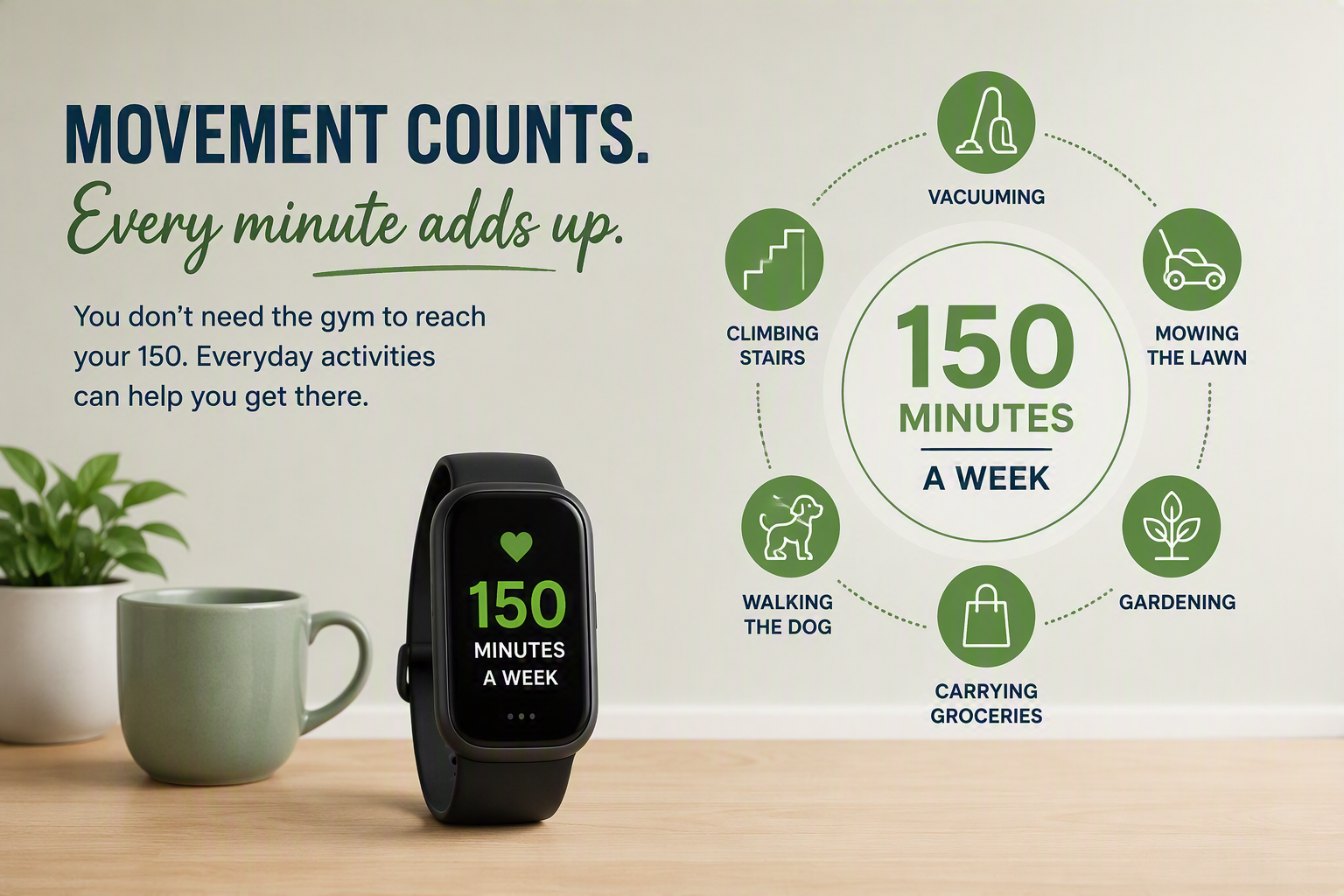
Moderate intensity means your breathing quickens, your heart rate rises, you can talk – but not sing – comfortably and the movement is sustainable for 30 minutes or more.
Examples of moderate activity include brisk walking to catch the bus, vacuuming several rooms, steady yard work, or carrying grocery bags a couple of blocks.
Vigorous intensity is a higher threshold: breathing is rapid, conversation comes in short bursts, and you may only manage a few minutes before needing a break. Bonus, vigorous intensity counts double toward your weekly total.
Examples of vigorous activity include pushing a heavy mower, shoveling wet snow, climbing stairs quickly, or hustling to a meeting wearing a backpack.
Where Your Minutes May Already Be Hiding
Before you assume you’re falling short, take stock of what your normal week already includes. Household tasks like steady-paced vacuuming, mopping, scrubbing bathrooms, and hauling laundry baskets up and down stairs count as moderate intensity as long as your breathing and heart rate are elevated. So does yard work like mowing, raking, weeding, and trimming hedges, as well as home projects like painting, moving furniture, and assembling shelves.
Caregiving and recreation add up too. Chasing kids around the yard, briskly pushing a stroller, dancing in the kitchen, playing yard games, or walking the dog are all legitimate contributors to your weekly total.
Turning Everyday Life Into a Movement Program
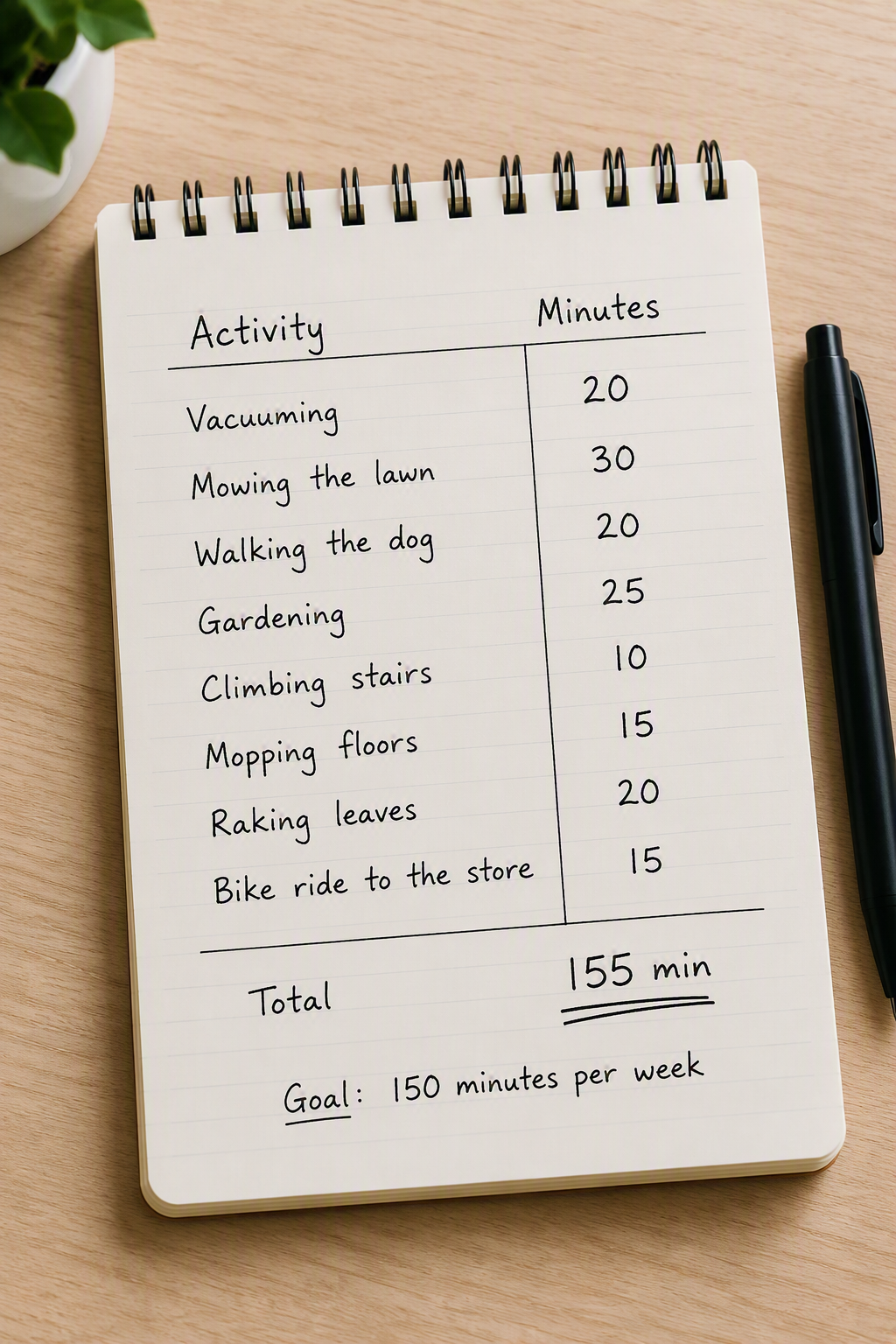
The easiest way to see how close you are to 150 minutes is to conduct a simple movement audit. For one week, jot down every time you walk briskly, climb stairs, do yard work, clean, or play actively for more than five minutes. Estimate the moderate-intensity minutes for each, and you’ll probably find you’re further along than you thought.
From there, a few small adjustments can help you close the gap intentionally:
Batch housework into contiguous 10–15-minute blocks instead of scattering it throughout the day
Take a brisk walk while waiting for a kid’s practice or appointment
Swap a sit-down coffee date with a friend for a walking meetup
Add active television time: march in place or do squats during commercials
Build movement into errands: park farther away, get off transit one stop early, or take the stairs instead of the elevator
If you’d rather not think in terms of exercise at all, lean into casual pick-up activities you might enjoy for their own sake, such as shooting hoops, kicking a soccer ball around, or pickleball. Other physically active hobbies include geocaching, birdwatching hikes, or martial arts like tai chi and qigong. These count just as much as a structured workout and are often easier to stick with.
If you like structure, try setting simple weekly objectives, such as 3-5 minutes of movement every hour during the workday, 45-60 minutes toward a weekend yard or house project, or a step goal on an activity tracker. Low-friction tracking tools, like tally marks on a calendar or a notes app, can help you see your progress and stay motivated.
For a structured digital resource to map your week’s physical activities, check out the free Move Your Way Activity Planner.
How Structured Exercise Fits In
150 minutes per week is a robust minimum target for most adults, which many can reach largely through daily life. However, accumulating weekly totals beyond 150 minutes may offer additional health benefits. Here, structured workouts can be an effective and efficient way to build additional weekly volume and overall fitness.
Keep in mind that weekly physical activity might be challenged at times by changing seasons or circumstances and call for a different strategy. For instance, bad weather or a busy stretch at work might mean leaning more on indoor options, while a quieter or warmer season could open the door to more outdoor activity. As your situation changes, structured workouts can be a good way to help keep your 150-minute habit intact.
The Bottom Line
The best kind of movement is the kind you find doable, safe, and at least somewhat enjoyable. Every additional bit of activity generally translates to more protection for your heart and your overall health. Whether it comes from a formal workout or an afternoon of yard work, movement remains one of the most powerful levers you can pull for a longer, healthier life.
Source: American Heart Association (aha.org)
